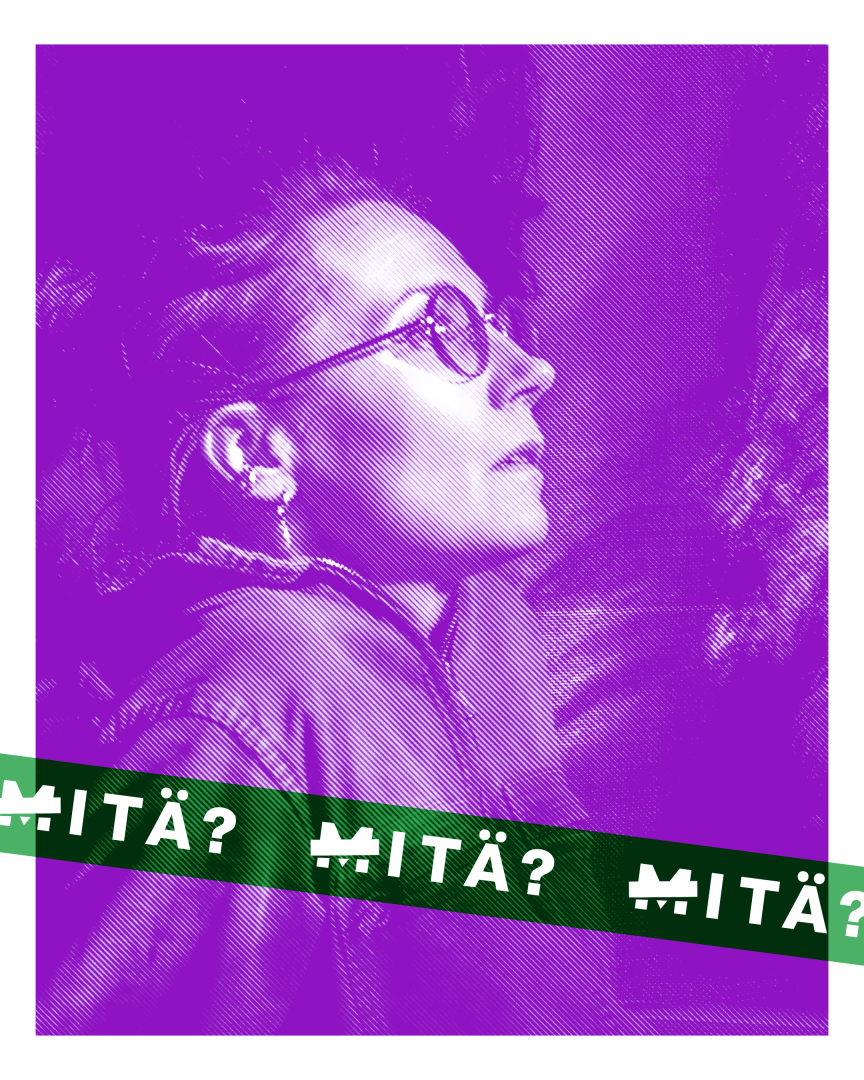
Hanna-Kaisa Korolainen
Living room in (fake) fur, 2025
The work consists of a living room installation covered with ryijy textiles and a four-part wall installation. It refers to Meret Oppenheim's Luncheon in Fur, in which fur changed the meaning of the object, and Harro Koskinen's Sikaperhe (Pig Family), which comments on the bourgeois lifestyle.
The hairiness created by the ryijy surface transforms the objects into abjections, objects that emphasize animality and do not invite a relaxed attitude. Hair grows in the wrong places and the uncontrollability of nature takes over in a soft but slightly nightmarish living room simulation. The work challenges the ideal of beauty, in which body hair has been considered indecent. It invites us to experience a revolution in hairiness and to acknowledge the animal roots of humanity.
The installation combines elements of pop art and Arts and Crafts influences. The ryijy textiles owe their origins to the art of Japanese artist Ogata Korin (1658–1716). One ryijy features ALF, a character from a 1980s American children's series, a furry alien whose comical nature and lack of human manners formed the basis for the TV series' humour. Instead of television, Korin's living rooms were adorned with flowers painted on lacquered screens. Nowadays, the idea of stopping to look at a single image for decades seems tediously absurd. This slowly handcrafted piece represents quiet resistance against all things mass-produced.
Hanna-Kaisa Korolainen works with textiles, ceramics, and glass. In her dissertation, she examined the role of inspiration in the creative process. In her works, the past intertwines with the present, creating absurd combinations. Her years in Paris and Brussels, as well as her background in fashion and textile design, are reflected in the colours and materials of her works. Hanna-Kaisa Korolainen spent her childhood and youth in Savonlinna. She currently lives in Helsinki, from where her artistic work extends across Europe, the United States, and Asia.