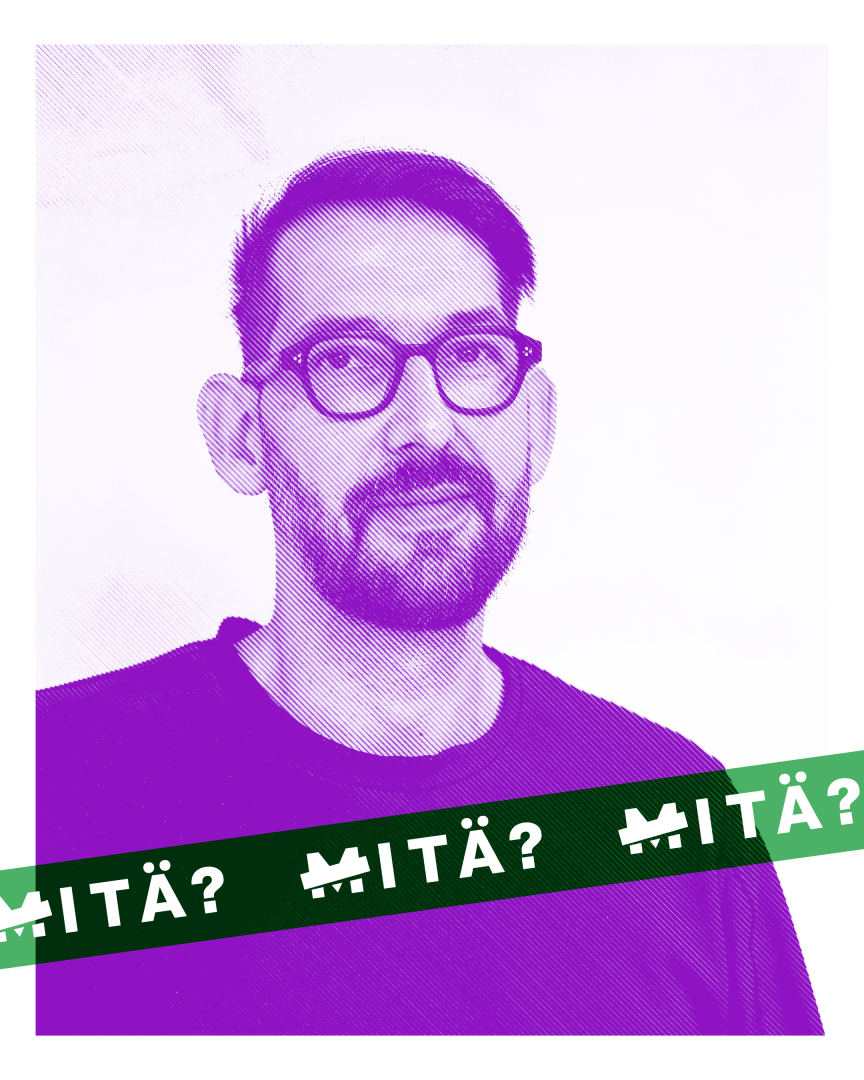
Michal Czinege
Faraway, So Close!, 2025
Faraway, So Close! is a spatial installation in which Michal Czinege reflects on the nature of perception and reality and their boundaries in relation to each other. The work is based on the interaction between light, shadow, the painted surface, and the viewer.
The visual information provided by shadows serves as a guide for perceiving the surrounding world. Our understanding of how shadows behave is so deeply rooted in our everyday perception that our comprehension is challenged when unexpected changes occur in the setting. In the installation, there is something about the canvas that separates the viewer from their shadow, blurs boundaries, and severs the connection to the shadow. The impression of depth fluctuates. Is there something in front of the shadow, or has the shadow moved inside, between, or behind something? What is actually happening? Are reality and perception one and the same?
In this work, the invisible becomes visible, albeit as a fleeting phenomenon, only in moments when the viewer's own shadow becomes part of the work. The title of the work, Faraway, So Close!, is borrowed from Wim Wenders' film, in which an invisible angel becomes a physical human being and is drawn into the complexities of human life. Czinege highlights the limitations of our perception, but at the same time questions the idea that there is a stable state in which we can observe reality detached from it and without influencing it. Instead, our existence often has complex consequences for the prevailing environment, which we ourselves are unable to comprehend.
Michal Czinege is a Slovakian-born visual artist who lives and works in Nurmes. He works in a multidisciplinary way, exploring the relationships between perception, light, and colour. Czinege earned his doctorate in art from the Academy of Fine Arts and Design in Bratislava, where he served as an assistant professor of painting until he moved to Finland in 2016. Czinege's works have been widely exhibited internationally and are included in several European art collections.